What is MMHOP?
(The Missing Middle Housing Opportunity Overlay)
MMHOP, like TSDO before it, is a polarizing piece of zoning legislation from the Anchorage Assembly.
Below we explain what it is, what different sides believe it will do to the city, and help you learn if your neighborhood is impacted. And because this is important no matter where you land on the issue, we also give you links and ideas for getting involved.
FAQs
What is MMHOP?
Assembly Ordinance 2026-85 or “MMHOP” (Missing Middle Housing Opportunity Overlay) is a new version of a failed proposal referred to as “TSDO” (Transportation Supported Development Overlay). MMHOP, like TSDO before it, is an attempt to change zoning within a quarter mile of frequent bus routes to encourage more density through townhomes, triplexes, apartments, condo buildings, and other multi-unit dwellings. It does this by increasing maximum height and lot coverage, and reducing setbacks. Effectively, all neighborhoods in the overlay area become R4 (medium to high density) zones. It aligns with tax incentives that give developers a 25-year property tax abatement for building homes with 8+ units. It is also supported by an accompanying ordinance that changes density targets in these areas to a minimum of 36 units per acre (up from 3 to 8 units in most neighborhoods).
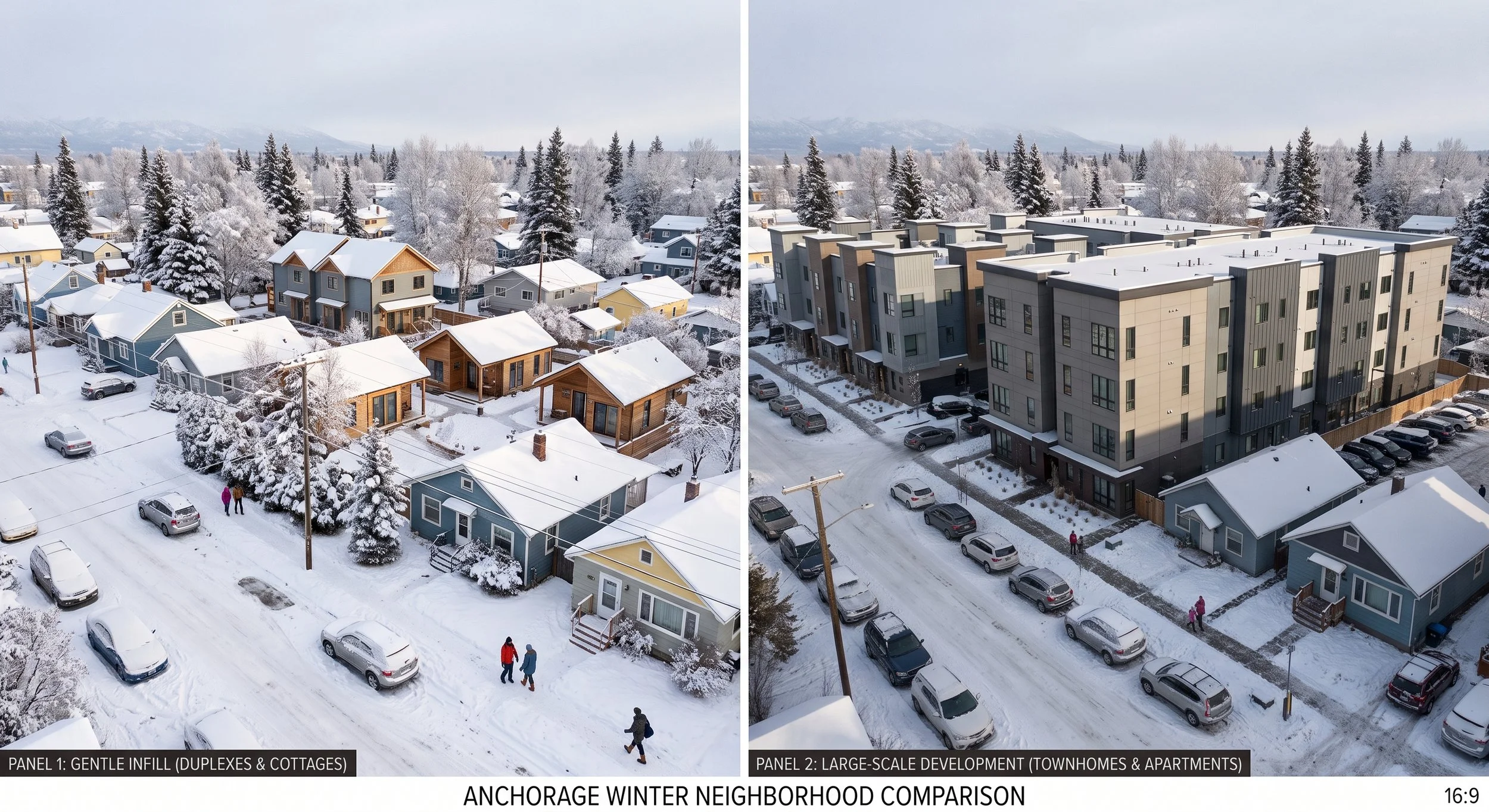
Supporters of MMHOP believe that adding more housing will create walkable neighborhoods with cottage courts and small new homes. They want it to create affordable options when homeowners chose to move into new developments, freeing up existing housing stock. They tie MMHOP to national and local housing justice issues.
Opponents argue that this is a giveaway to developers, and that it doesn’t follow the city’s long range planning goals around neighborhood land use. They believe that “gentle” infill in the form of ADUs and duplexes is more appropriate for traditionally single-family neighborhoods, while corridors like Fireweed, Muldoon, and downtown streets are better locations for the taller apartments and condos that will benefit from the tax break.
There have been several amendments proposed by community councils and other groups that try to bridge the divide. One proposal removes R1 and R2 neighborhoods from the overlay, as duplexes and ADUs are already allowed in these zones. Another removes known high danger earthquake zones from the map (wildfire zones on the Hillside are already removed). Yet another amendment removes a loophole that would allow homeowners to build giant “McMansions” with the new lot dimensions. Another requires any new homes built to be for primary residence only–no short term rentals.
Which neighborhoods are impacted?
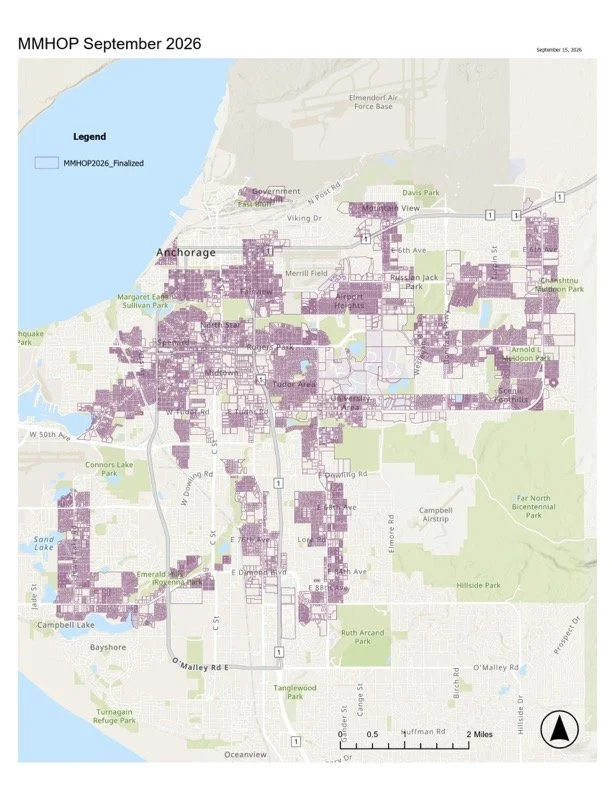
The MMHOP overlay map has changed several times, but the current version is here. Neighborhoods impacted include Government Hill, Fairview, Mountain View, Muldoon, Nunaka Valley, Scenic Hills, Airport Heights, Rogers Park, College Village, North Star, South Addition, Bootleggers Cove, Spenard, Turnagain, Midtown, Jewel Lake, Sand Lake, Taku/Campbell, Abbott Loop, Tudor, and more. Over 30,000 homes are in the overlay.
How can I share my opinions?
There are several ways. The most important is to attend and testify at the Oct. 6th (5pm) Anchorage Assembly meeting at Loussac Library.
You can also submit written commentary to the Assembly here by Oct 1st. Reference AO 2026-85.
Other ideas: Attend your Community Council meeting and ask for a resolution about MMHOP. Make a yard sign! Email your neighbors! Write an op-ed to ADN!
You can read our position on MMHOP at: https://www.facebook.com/housinggrowthAnc/